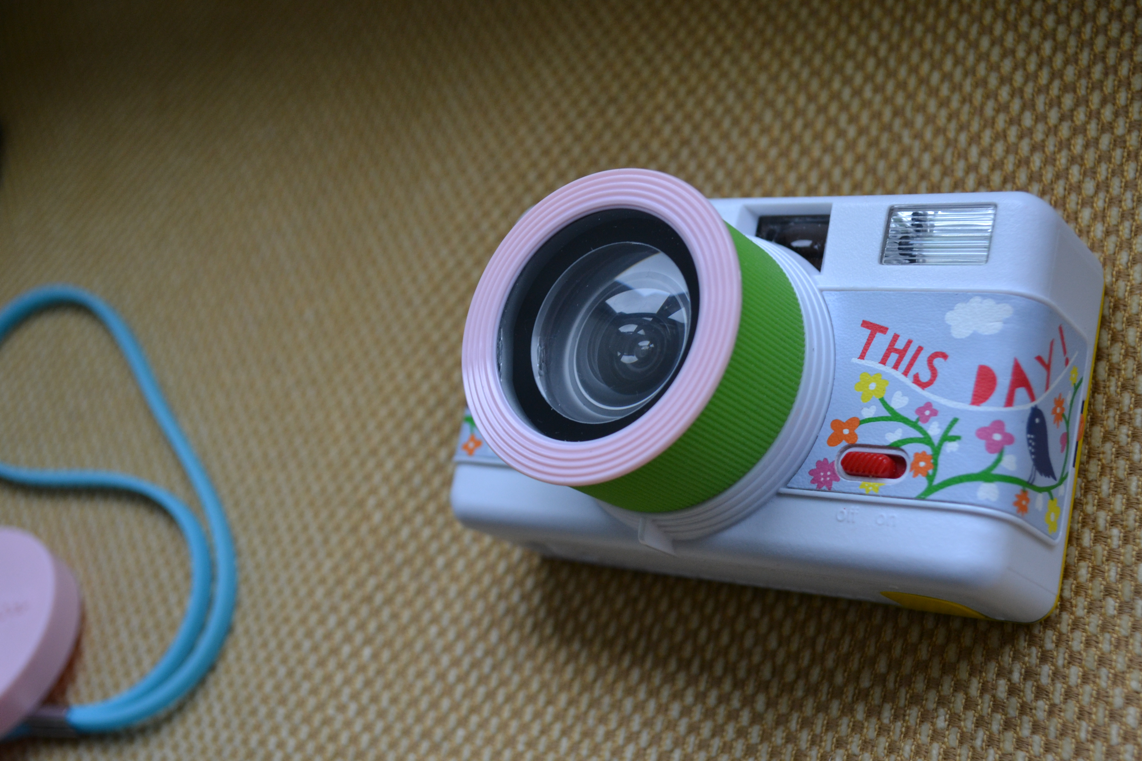
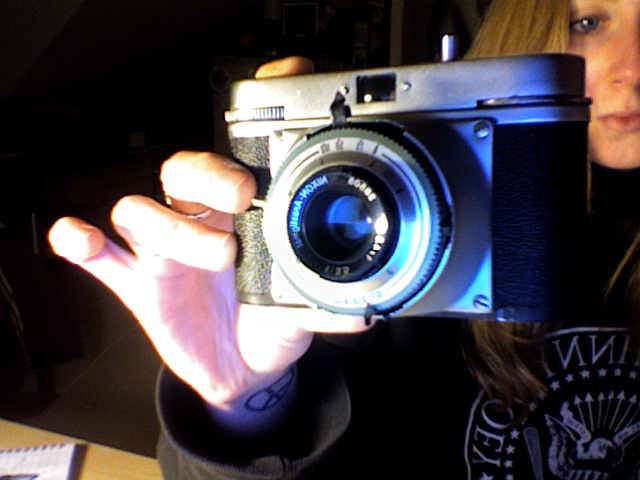
First things first. A lot of you are probably sitting thinking 'what the hell is Lomography?!'
Let me explain with this equation.....
(Analogue photography + film format + Russian roots + plastic fantastic cameras) - (All the rules of photography) + (Fun x Freedom) + (Communities / global) = Lomography & their Lomographic society
Ok, with that let me also link you to Lomography's OWN rules on photography. Forget your rule of thirds and composition and open you mind to these......
http://www.lomography.com/about/the-ten-golden-rules
I was first introduced to Lomography in 2008, and I honestly can't remember how, who or where it happened, but as a photographer, Lomo is to me is like the great escape.
I don't have to think, there is no planning ahead. It is spontaneous, free and exciting. Not to forget the suspense and surprise element of what you have created with a camera that represents that of a toy!
I have a few cameras now from the Lomography range and I absolutely love them.
I was also shocked to find out a few friends where into it too and with that, we had our own small, but mighty Lomo group!
Based in Bangor, a small town in Northern Ireland, finding people who are into photography is tricky enough, but to stumble into a group through friendship, only to find out we all had the same interests and a range of Lomography cameras between us, we embarked on our own crazy, experimental and individual approach towards photography.
My first Lomo camera I bought in 2008. It was the Diana F+ with a flash unit.
It arrived in the post and I was gutted to see that the lens had snapped off it during it's journey it it's new home.
 |
| My Diana F+ 120mm Lomo Camera |
I took it out of the box as I was curious anyway. When I saw the simple build quality and the stripped down, straightforward construction of it, I went to find the superglue.
A quick look around the box and I could find nothing else that had broken, so I glued the lens in place and left it to dry as I read through the instruction manual and some of the short stories from a book that also came with the pack.
The Diana F+ uses 120mm film, which is a bit tricky to get your hands on and also comes at a price. I used this camera a few times with color 120mm rolls. Each roll of film cost me around £4.00. With that I can get either 12 or or 16 exposures depending on size / quality I want them at.
Developing also comes at a cost with my local Jessops in Belfast City being the nearest place to process this old format, 120mm film in color. This also cost me £4.00.
In total, it costs around £10 every medium format film I used with the Diana F+.
To help drive down the cost, but boost up the fun of using this camera, I ordered the 35mm back to fit to the camera. It means you can use 35mm film whilst also having the choice to change back to 120mm for the next roll if you wish.
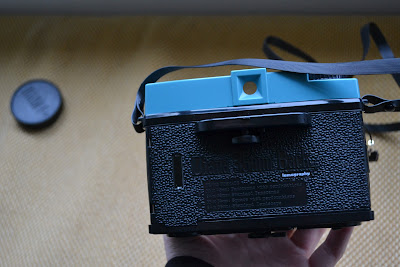 |
| The 35mm back for the Diana F+ |
A roll of ISO 400 color 35mm film costs me £1 from the local Poundland store, a complete godsend to those who still enjoy the film format!
The photography lab in Bangor also still processes 35mm color for the cost of £2.50 a roll and if you bring a memory stick, they will just transferred your scanned negatives onto that for you. It's quick and handy, and of course, cheaper!
It now works out at £3.50 for 24 exposures, so I'm a happy bunny.
The next Lomo camera I decided to try was the Fisheye. I acquired this in 2009.
 |
| My Lomo Fisheye |
It's a simple point and shoot camera. It's handy to use the flash indoors or on a dull day outside. In summer, it works great without flash if you are using ISO 400 film.
You have to get real close into your subject with this one because of the lens on these cameras.
The build in flash is really handy on this little camera, and the body is clean cut and simple.
 |
| Simple and full of character. Just like the photographs it creates! |
 |
| Durable and easy to use - simple functions, all two of them! |
This was a really great buy. Personally, I would recommend this wonderful treat of a camera to those who don't know much about photography or film, but want to have a bit of fun with it.
Since it is purely 35mm committed, it is cheap to run. The images are cheery and with a fixed lens, aperture and shutter speed, novices have nothing to worry about!
There are a few different models of each Lomo camera out there, I really like this little fisheye, it has a few nice lines on the back of it too......
 |
| Fisheye back - You can see i'm using a Kodak 200 film, the flash has been handy with this one! |
In 2010 I decided it was time for another medium format Lomo camera and went for the twin lens Lubitel 166.
 |
| The bomb-proof Lubitel 166 |
This camera was an ebay winner for me as I manage to purchase it for around £60. They retail at around £200-300 new or refurbished.
When I got this camera there were signs of wear and tear on a lot of it. It is a heavy, metal bodied camera from lomo, which, in comparison to the lightweight, plastic Diana or Fisheye, this camera is a bit of a beast.
It takes 120mm although you could do a few homemade conversions to 35mm if you wish. (Hope to have a video of the conversion up soon for those who want to try it!)
I really love this camera, but it takes a bit of patience and getting used too. You have aperture and shutter speed options as well as a lens you can focus with.
 |
| The image is seen back to front through the top of the camera |
The Lubitel 166 is a far cry from the simple Fisheye.
I love to use it but know the situations that it is best suited for. Nothing spontaneous, it's a bit too refined for that carry on.
I use Ilford HP5 400 with this film. Medium format 120 of course. I always feel the black and white film fits the mood of this camera. Somehow the idea of using color with this heavy accessory never gelled with me. Although, that being said, there are some wonderful images in both colour and b&w that have been created with this camera from people all over the globe.
 |
| It's difficult not to become attached to these things |
Lomography is not just a brand of cameras. Check out their website here:
http://www.lomography.com/
They have an online community, a magazine, a shop and a whole community both online and on the streets keeping analogue photography alive.
Here is my personal profile on their community site:
http://www.lomography.com/homes/suzi_nyc
It's not wonderful at the minute, but thankfully I now have a lot more time to work on the Lomo stuff I have wanted to for the past year!
Get connected if you are on there and start adding friends and following the work that you like. Even if you haven't got a camera yet, it's a great way to do a bit of research and use as a guide to help you choose your first Lomogoraphy camera. IT WILL CHANGE YOUR LIFE!
 |
| Bangor through a Fisheye - By Suzi Taylor 2010 |
|
 |
| The (not so busy) Pickie Fun Park, Bangor, Co.Down - By Suzi Taylor 2010 (Diana F+ 120mm) |
 |
| Double Exposure, Bangor, Co.Down - By Suzi Taylor 2010 (Diana F+ 120mm) |
 |
| Drunken Fisheye Fun! - By Suzi Taylor 2011 |
 |
| Urban Exploring with a few of the Lomo nerds! Mel and her green hair - By Suzi Taylor 2012 (Diana F+ 35mm conversion) |
|
 |
| Rosie, autumn 2011 - By Suzi Taylor (Diana F+ 35mm conversion) |
 |
| The Lomo Diana with flash, taken with the Lomo Fisheye - By Suzi Taylor, Jan 2011 |
I'll be writing more about Lomography in the future, but hope this has been a helpful insight into what it is and what they are about.